Lionfish Dwarf Zebra (Dendrochirus Zebra)
Dwarf Zebra Lionfish (Dendrochirus zebra)
The Dwarf Zebra Lionfish is the perfect compromise for hobbyists who want the exotic, "prehistoric" look of a lionfish without the massive size of the Pterois species. It is a stunning ambush predator that carries the same majestic fins and venomous spines as its larger cousins but remains manageable for medium-sized aquariums.
Key Information
-
Common Names: Dwarf Zebra Lionfish, Zebra Turkeyfish
-
Scientific Name: Dendrochirus zebra
-
Origin: Indo-Pacific (Red Sea to Australia and Indonesia)
-
Max Size: 18–20 cm (approx. 7 inches)
-
Lifespan: 10+ years
-
Temperament: Semi-aggressive (Peaceful toward fish it cannot swallow)
-
Diet: Carnivore – Ambush predator
-
Care Level: Moderate
Appearance & Identification
The Zebra Lionfish is often confused with the Fu Manchu or Dwarf Fuzzy Lionfish. Here is how to spot the Zebra:
-
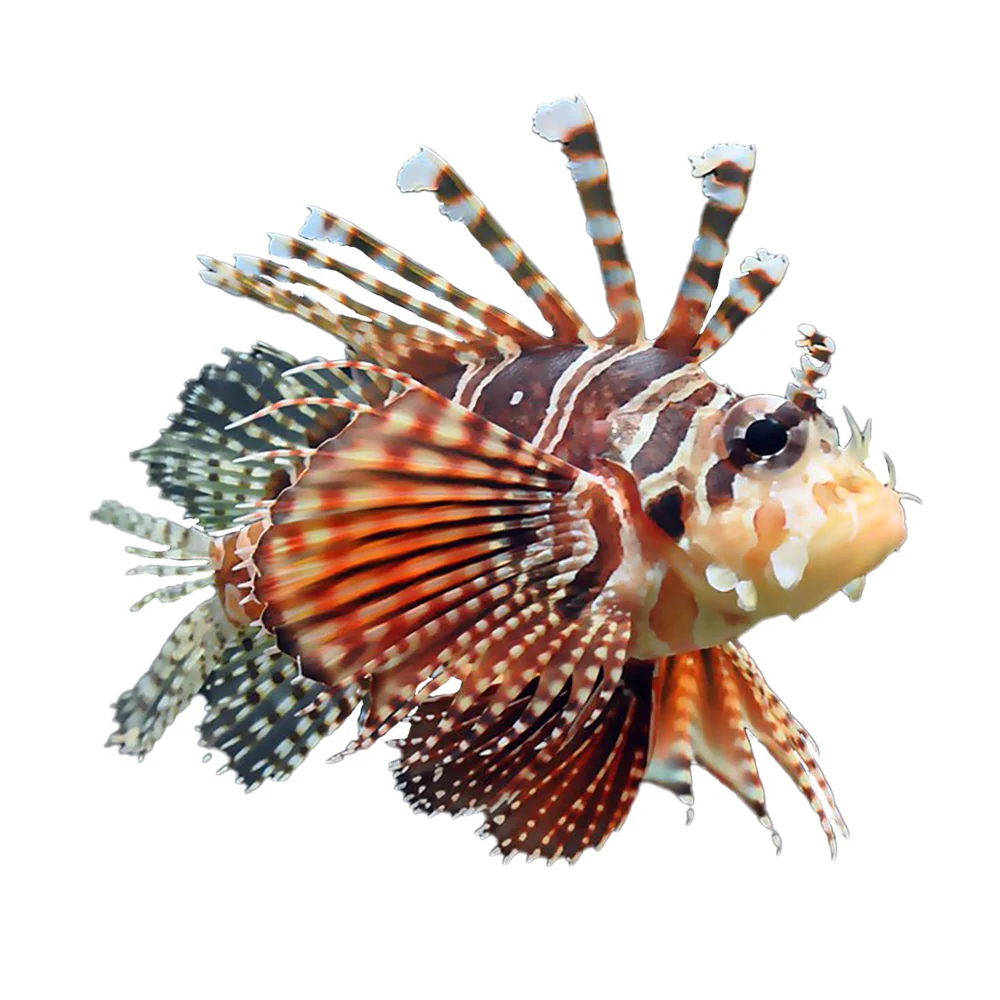
The Pattern: Features distinct, crisp vertical "zebra" stripes in shades of reddish-brown, chocolate, and white.
-
The Pectoral Fins: Its pectoral fins are large and fan-like, with membranes that extend almost to the tips of the rays, resembling a bird's wing.
-
The "Antennae": Look for the small, leafy appendages above the eyes and near the mouth, which help break up its silhouette while hunting.
-
Venomous Spines: Like all lionfish, the dorsal, anal, and pelvic spines are venomous. Handle with extreme caution during tank maintenance.
Behaviour & Tank Compatibility
-
Ambush Predator: This fish spends much of its time hanging upside down under ledges or "hovering" near the rocks. It is a master of patience, waiting for a small fish or shrimp to swim within striking distance.
-
"The Mouth Rule": It is generally peaceful toward other fish, provided they are too large to fit in its mouth. If it can swallow it, it eventually will.
-
Reef Safe (with Caution): It is 100% safe with corals. However, it is not safe with ornamental shrimp or small crabs, which are its natural diet.
-
Tank Mates: Best kept with similarly sized or larger, peaceful-to-semi-aggressive fish. Excellent tank mates include larger Tangs, Angelfish, Foxfaces, and larger Wrasses. Avoid keeping it with aggressive "fin-nippers" (like some Puffers) that might damage its delicate fins.
Ideal Tank Setup
-
Tank Size: A minimum of 115L–150L (30–40 Gallons) for a single specimen.
-
Rockwork: Provide plenty of caves, overhangs, and shaded areas. They naturally prefer to hang out in the shadows during the day.
-
Filtration: Because they are carnivores and eat large meals, they produce a significant biological load. A strong protein skimmer is highly recommended.
-
Flow: They prefer low to moderate flow. Too much turbulence can make it difficult for them to hover comfortably.
Dietary Needs: The Feeding Challenge
The biggest hurdle with Zebra Lionfish is transitioning them from live food to frozen:
-
Initial Diet: New arrivals often require live ghost shrimp or feeder fish to trigger their hunting instinct.
-
The Transition: Use a "feeding stick" to wiggle pieces of frozen mysis, silversides, or krill in front of them to mimic live movement.
-
Feeding Frequency: Adults only need to be fed 3–4 times per week. Overfeeding can lead to fatty liver disease and water quality issues.
Safety Warning
[CAUTION] The spines of the Zebra Lionfish are highly venomous. A sting causes intense pain, swelling, and in some cases, a severe allergic reaction. If stung, soak the area in the hottest water you can tolerate (without burning skin) to break down the protein-based venom, and seek medical attention if symptoms worsen.
Why Choose the Zebra Lionfish?
The Zebra Lionfish is for the hobbyist who wants a "showstopper" with a big personality. They are incredibly intelligent and often learn to "beg" for food when their owner approaches the tank. If you have a reef with larger inhabitants and no small shrimp, the Zebra Lionfish adds a level of exotic drama that few other fish can provide.
Original: $67.82
-65%$67.82
$23.74Product Information
Product Information
Shipping & Returns
Shipping & Returns
Description
Dwarf Zebra Lionfish (Dendrochirus zebra)
The Dwarf Zebra Lionfish is the perfect compromise for hobbyists who want the exotic, "prehistoric" look of a lionfish without the massive size of the Pterois species. It is a stunning ambush predator that carries the same majestic fins and venomous spines as its larger cousins but remains manageable for medium-sized aquariums.
Key Information
-
Common Names: Dwarf Zebra Lionfish, Zebra Turkeyfish
-
Scientific Name: Dendrochirus zebra
-
Origin: Indo-Pacific (Red Sea to Australia and Indonesia)
-
Max Size: 18–20 cm (approx. 7 inches)
-
Lifespan: 10+ years
-
Temperament: Semi-aggressive (Peaceful toward fish it cannot swallow)
-
Diet: Carnivore – Ambush predator
-
Care Level: Moderate
Appearance & Identification
The Zebra Lionfish is often confused with the Fu Manchu or Dwarf Fuzzy Lionfish. Here is how to spot the Zebra:
-
The Pattern: Features distinct, crisp vertical "zebra" stripes in shades of reddish-brown, chocolate, and white.
-
The Pectoral Fins: Its pectoral fins are large and fan-like, with membranes that extend almost to the tips of the rays, resembling a bird's wing.
-
The "Antennae": Look for the small, leafy appendages above the eyes and near the mouth, which help break up its silhouette while hunting.
-
Venomous Spines: Like all lionfish, the dorsal, anal, and pelvic spines are venomous. Handle with extreme caution during tank maintenance.
Behaviour & Tank Compatibility
-
Ambush Predator: This fish spends much of its time hanging upside down under ledges or "hovering" near the rocks. It is a master of patience, waiting for a small fish or shrimp to swim within striking distance.
-
"The Mouth Rule": It is generally peaceful toward other fish, provided they are too large to fit in its mouth. If it can swallow it, it eventually will.
-
Reef Safe (with Caution): It is 100% safe with corals. However, it is not safe with ornamental shrimp or small crabs, which are its natural diet.
-
Tank Mates: Best kept with similarly sized or larger, peaceful-to-semi-aggressive fish. Excellent tank mates include larger Tangs, Angelfish, Foxfaces, and larger Wrasses. Avoid keeping it with aggressive "fin-nippers" (like some Puffers) that might damage its delicate fins.
Ideal Tank Setup
-
Tank Size: A minimum of 115L–150L (30–40 Gallons) for a single specimen.
-
Rockwork: Provide plenty of caves, overhangs, and shaded areas. They naturally prefer to hang out in the shadows during the day.
-
Filtration: Because they are carnivores and eat large meals, they produce a significant biological load. A strong protein skimmer is highly recommended.
-
Flow: They prefer low to moderate flow. Too much turbulence can make it difficult for them to hover comfortably.
Dietary Needs: The Feeding Challenge
The biggest hurdle with Zebra Lionfish is transitioning them from live food to frozen:
-
Initial Diet: New arrivals often require live ghost shrimp or feeder fish to trigger their hunting instinct.
-
The Transition: Use a "feeding stick" to wiggle pieces of frozen mysis, silversides, or krill in front of them to mimic live movement.
-
Feeding Frequency: Adults only need to be fed 3–4 times per week. Overfeeding can lead to fatty liver disease and water quality issues.
Safety Warning
[CAUTION] The spines of the Zebra Lionfish are highly venomous. A sting causes intense pain, swelling, and in some cases, a severe allergic reaction. If stung, soak the area in the hottest water you can tolerate (without burning skin) to break down the protein-based venom, and seek medical attention if symptoms worsen.
Why Choose the Zebra Lionfish?
The Zebra Lionfish is for the hobbyist who wants a "showstopper" with a big personality. They are incredibly intelligent and often learn to "beg" for food when their owner approaches the tank. If you have a reef with larger inhabitants and no small shrimp, the Zebra Lionfish adds a level of exotic drama that few other fish can provide.